Things To Do · 7 min read
Visiting the Great Wall: Which Section is Best for You?
Choose the perfect Great Wall section for your trip, from family-friendly Mutianyu to the rugged Jinshanling.
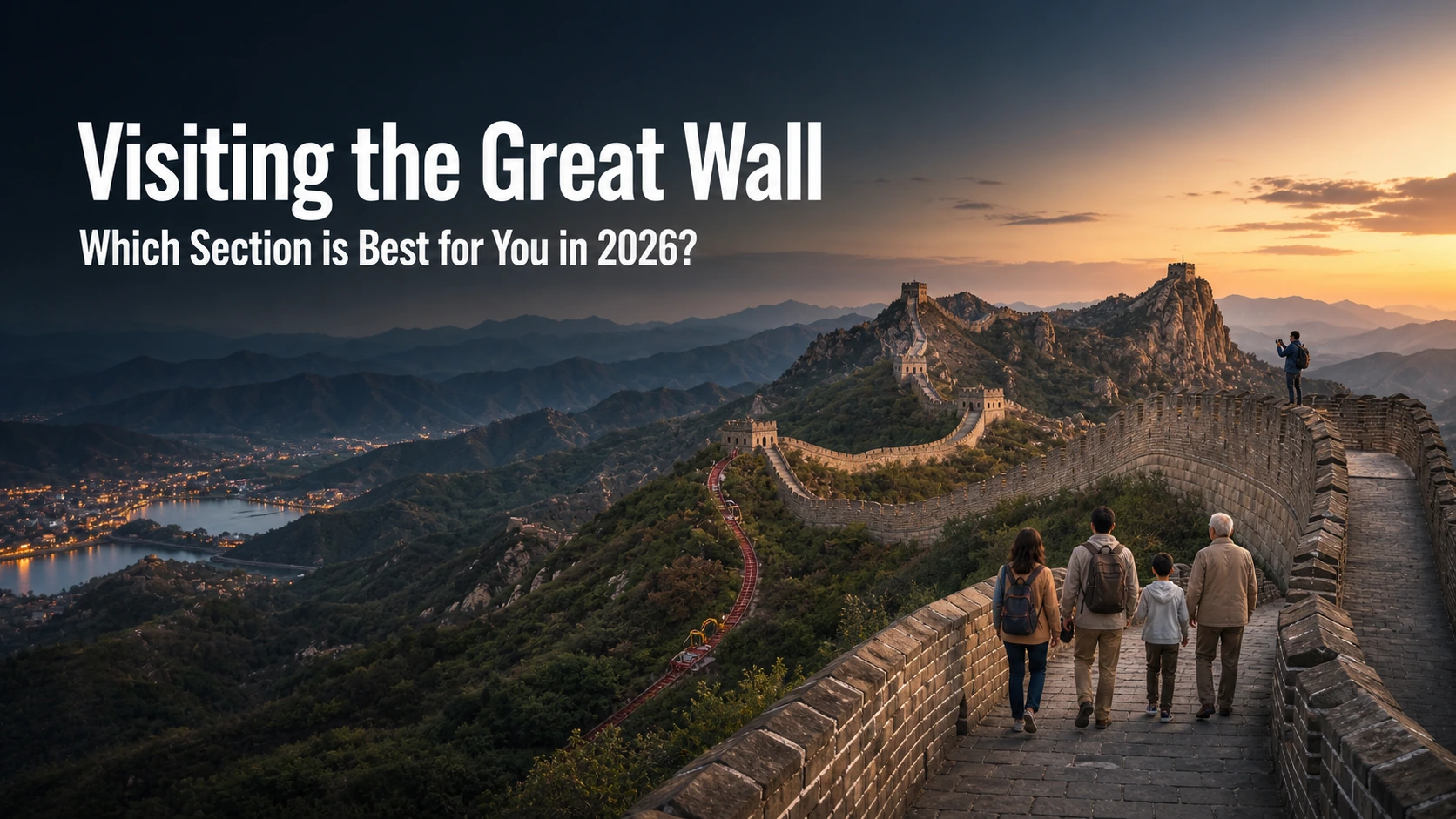
Choosing the "best" section of the Great Wall depends entirely on what you want to experience: a convenient, accessible walk, a thrilling toboggan ride, or a rugged, solitary hike through history. In 2026, the Great Wall remains China's most iconic landmark, but the experience varies wildly between its different gates.
Quick Answer: Which Section Should You Choose?
- For First-Timers and Families: Mutianyu is the top choice. It is beautifully restored, less crowded than Badaling, and features a fun toboggan ride down.
- For Accessibility and Speed: Badaling is the easiest to reach via high-speed rail and offers the most accessible paths for those with limited mobility.
- For Hikers and Photographers: Jinshanling offers a "wilder" feel with original Ming-dynasty masonry and significantly fewer tourists.
- For a Unique Night Experience: Simatai is the only section open for night tours, paired with the charming Gubei Water Town at its base.
1. Mutianyu: The Best All-Rounder
Mutianyu is widely considered the best section for international travelers in 2026. It strikes a perfect balance between being well-maintained and not being overly commercialized. Located about 75 kilometers (1.5 to 2 hours) from central Beijing, it offers stunning views of the wall snaking over lush, forested ridges.
Why it’s popular in 2026:
- The Toboggan: You can take a cable car or chairlift up, but the highlight for many is the stainless-steel slide (toboggan) that winds down from the wall to the valley floor.
- Restoration Quality: The watchtowers here are densely packed and fully restored, allowing you to see the architectural grandeur of the Ming Dynasty.
- Crowd Control: While popular, it rarely feels as suffocating as Badaling because the visitor flow is better managed.
Local Insight: Locals often suggest arriving at the Mutianyu ticket office by 8:30 AM. By the time the large tour groups arrive at 10:30 AM, you will already be at the further watchtowers (like Tower 20), where the crowds thin out significantly.
2. Badaling: The Accessible Icon
Badaling is the most famous section of the Great Wall. It was the first to open to tourists and has hosted hundreds of world leaders. In 2026, it remains the most developed section, featuring a Great Wall Museum and a cinema.
Key Considerations:
- Ease of Access: Thanks to the high-speed rail (HSR) departing from Beijing North or Qinghe Station, you can reach Badaling in about 20–30 minutes. This makes it the only section viable for a half-day trip.
- Accessibility: It is the most wheelchair-friendly section, with ramps and elevators available in certain areas (though some require advance booking).
- The Crowd Factor: This is the most crowded section. During Chinese public holidays (like Golden Week in October), Badaling can reach its maximum capacity of 65,000 visitors per day very quickly.
3. Jinshanling: The Photographer’s Choice
If you want the "National Geographic" shot of the Great Wall, Jinshanling is your destination. Located about 2.5 to 3 hours from Beijing, it is further away, which naturally filters out the casual day-trippers.
What to Expect:
- Authenticity: Jinshanling is only partially restored. You will see the contrast between the pristine towers and the crumbling, "wild" sections of the wall.
- Challenging Hike: The terrain is steeper and more uneven than Mutianyu. It is a true hike, not just a walk.
- Solitude: It is common to walk for 20 minutes without seeing another soul, especially if you head toward the West Five-Eye Watchtower.
4. Simatai: The Night Wall
Simatai is famous for its steepness and its proximity to Gubei Water Town, a recreated ancient village. It is the only section of the wall that is lit up at night, providing a dramatic backdrop for a late-evening stroll.
- The Experience: Most visitors spend the afternoon in the water town and take the cable car up to the wall at sunset. The view of the illuminated village below and the stars above is unmatched.
- Strict Controls: Because Simatai is quite steep and narrow, certain sections are closed to the public for safety. You must stay within the designated "Night Tour" areas if visiting after dark.
Comparison Table: Great Wall Sections at a Glance
| Section | Distance from Beijing | Difficulty | Best For | Transport Mode |
|---|---|---|---|---|
| Mutianyu | 75 km (1.5-2 hrs) | Moderate | Families, Toboggan | Didi / Private Car |
| Badaling | 70 km (0.5-1 hr) | Easy | Accessibility, Speed | High-Speed Rail (HSR) |
| Jinshanling | 150 km (2.5-3 hrs) | Hard | Photography, Hiking | Private Car / Bus |
| Simatai | 140 km (2.5 hrs) | Moderate | Night views, Resort stay | Tourist Bus / Didi |
Logistics: How to Get There in 2026
Navigating transport to the Great Wall has become significantly easier with the integration of digital tools. According to Trip.com’s China transportation guide, travelers have several reliable options for reaching these sites.
High-Speed Rail (HSR)
For Badaling, the HSR is the gold standard. You can book tickets via major travel platforms or the official 12306 app. You will need your passport to board. The train drops you within walking distance of the cable car entrance.
Didi and Taxis
For Mutianyu or Jinshanling, many international travelers prefer using Didi (China’s equivalent of Uber). You can use the English version of the Didi app, which accepts international credit cards.
- Tip: If taking a Didi to Mutianyu, it is often better to negotiate a "round trip" price with the driver or use the "intercity" function in the app, as getting a return ride from the mountains in the late afternoon can be difficult.
Private Hire
For sections further out like Jinshanling, hiring a private driver for the day remains the most stress-free option. This allows you to leave at sunrise and avoid the peak heat and crowds.
## Tripilot Planning Tip
When planning your Great Wall excursion, use Tripilot’s personalized itinerary planning to buffer your travel times. A common mistake is underestimating the time it takes to get from a Beijing hotel to the actual wall entrance. Tripilot can help you calculate the "door-to-door" time, including the shuttle bus rides from the parking lots to the cable car stations, which can add 30–45 minutes to your journey.
Local Planning Habits & Practical Advice
1. Real-Name Registration
In 2026, all Great Wall sections require real-name registration. You must bring your physical passport. Digital copies or photos are often rejected at the turnstiles. Most tickets must be booked in advance via official WeChat mini-programs or authorized travel platforms.
2. The "Shuttle Bus" Trap
At almost every section (except parts of Badaling), your taxi or Didi will drop you at a "Tourist Center." You cannot walk to the wall from here. You must purchase a separate shuttle bus ticket (usually 15–20 RMB) to reach the actual foot of the wall where the cable cars start.
3. Food and Water
Prices on the wall are triple what they are in the city. While Mutianyu has a Subway and a Burger King at the base, Jinshanling has very few options. Always carry at least 1.5 liters of water per person, especially in the humid summer months of July and August.
4. Weather and Air Quality
Check the AQI (Air Quality Index) before heading out. A "clear day" in Beijing doesn't always mean a clear day at the wall. If there is heavy smog, the sweeping mountain views will be obscured. Conversely, the wall is stunningly beautiful—and dangerously slippery—immediately after a snowfall.
5. Avoiding the "Wild Wall" Risks
You may hear about "wild" sections like Jiankou. While beautiful, these are technically closed to tourists and can be dangerous due to loose masonry and steep drops. For 2026, stick to the managed sections unless you are with a professional trekking guide who has verified the current local regulations.
FAQ
Which section of the Great Wall is closest to Beijing?
Badaling is the most accessible and feels the closest due to the 20-30 minute high-speed train connection from Beijing North or Qinghe Station.
Can I visit the Great Wall without a tour?
Yes, it is very easy to visit independently in 2026. You can take the high-speed rail to Badaling or use a Didi/taxi to reach Mutianyu. Just ensure you book your tickets in advance using your passport details.
Is the toboggan at Mutianyu safe?
Yes, the toboggan is a well-maintained tourist attraction. You control your own speed with a handbrake. However, it may close during rainy or snowy weather for safety.
Do I need my passport to visit the Great Wall?
Yes, all major sections of the Great Wall require your physical passport for entry as part of the real-name ticketing system used across China.