Things To Do · 6 min read
Chengdu Beyond Pandas: A Local's Guide to Tea Houses and Spicy Eats (2026)
Discover Chengdu's 'slow life' through hidden tea houses, ear cleaning rituals, and legendary 'fly restaurant' spicy eats.
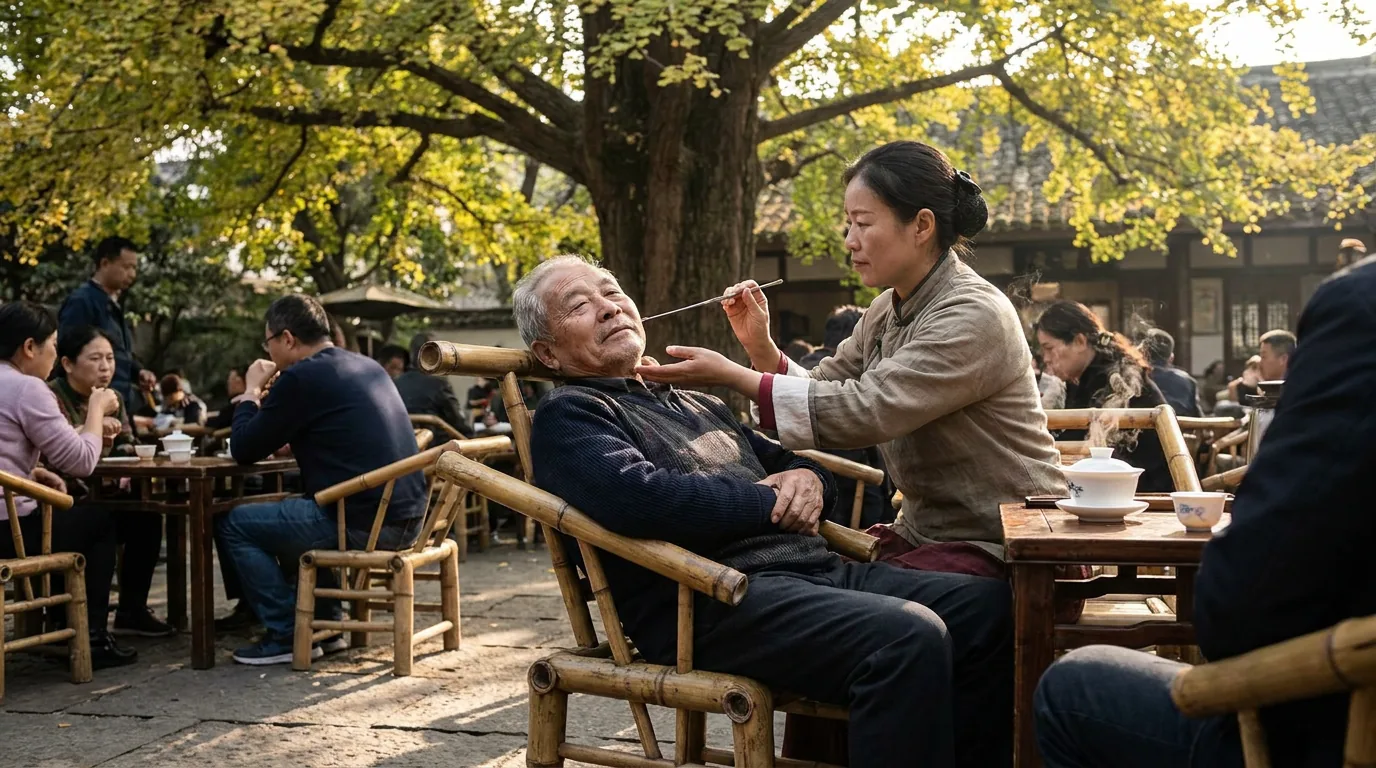
While the Giant Panda Breeding Research Base is the undisputed headline act for most visitors, the true soul of Chengdu lies in its philosophy of Man Shenghuo (Slow Life). In this sprawling Sichuan capital, the rhythm of the day isn't dictated by the rush of the subway, but by the clinking of tea lids and the bubbling of chili oil.
To visit Chengdu and only see the pandas is like visiting Paris and only seeing the Eiffel Tower—you miss the texture of the city. This guide focuses on the authentic Chengdu experience: the ancient tea houses of People’s Park, the legendary "fly restaurants" hidden in back alleys, and the sensory overload of a true Sichuan hotpot.
Quick Answer: The Top 5 Non-Panda Experiences in Chengdu
- People’s Park (Renmin Gongyuan): Spend an afternoon at Heming Tea House for jasmine tea and a professional ear cleaning.
- Cangying Guan (Fly Restaurants): Hunt down small, unassuming eateries for authentic Mapo Tofu and Dan Dan Noodles.
- Wuhou Shrine & Jinli Street: Explore Three Kingdoms history followed by evening street snacks.
- Kuanzhai Alley: Walk the "Wide and Narrow Alleys" to see restored Qing Dynasty architecture.
- Sichuan Opera: Watch a "Face-Changing" (Bian Lian) performance at Shufeng Yayun.
1. The Tea House Ritual: People’s Park and the Art of Doing Nothing
In Chengdu, the tea house is the local living room. While modern coffee shops are popping up, the traditional bamboo-chair tea house remains the city's cultural anchor.
Heming Tea House (鹤鸣茶社)
Located inside People’s Park (Renmin Gongyuan), Heming is over 100 years old and is the most iconic spot to witness Chengdu’s leisure culture.
- The Experience: You find a low bamboo chair, order a cup of Zhu Ye Qing (Green Bamboo tea) or Jasmine tea, and receive a large thermos of hot water for unlimited refills.
- The Social Fabric: You will see locals playing Mahjong, retirees debating politics, and business deals being struck over sunflower seeds.
- Local Insight: If you want to look like a local, don't drink from the cup immediately. Use the lid to gently brush the floating tea leaves away and blow on the surface. If you need a refill, simply leave the lid propped against the side of the cup or upside down on the table; the staff will see it and bring hot water.
The "Ear Cleaning" (Cai Er) Experience
While sipping tea, you will likely be approached by practitioners wearing headlamps and carrying long metal tools. This is Cai Er (采耳), or professional ear cleaning. It is a quintessential Chengdu tradition.
- What it feels like: It’s not just about hygiene; it’s a sensory experience. They use various tools—vibrating tuning forks, feathers, and tiny scoops—to stimulate nerves. It is surprisingly relaxing and is often described as a "brain massage."
- Cost: Expect to pay between 30 and 100 RMB depending on the duration and complexity of the service.
2. The Culinary Quest: "Fly Restaurants" and Spicy Eats
Chengdu is a UNESCO City of Gastronomy. While high-end restaurants exist, the most revered food is found in Cangying Guan (苍蝇馆子), or "Fly Restaurants." These are small, often cramped, and no-frills eateries that are so popular they attract crowds like flies.
How to Spot a Great Fly Restaurant
Don't look for English menus or fancy decor. Look for:
- Plastic stools spilling out onto the sidewalk.
- A line of locals holding numbered tickets.
- A limited menu (often just 5–10 dishes they have perfected over decades).
Must-Try Dishes Beyond Hotpot
| Dish Name | Chinese Name | Flavor Profile |
|---|---|---|
| Mapo Tofu | 麻婆豆腐 | Silken tofu in a spicy, numbing sauce with fermented beans. |
| Dan Dan Noodles | 担担面 | Savory, spicy noodles with minced pork and preserved vegetables. |
| Kou Shui Ji | 口水鸡 | "Mouth-watering chicken" served cold in a pool of chili oil and sesame. |
| Guo Kui | 锅盔 | Crispy, flaky flatbread stuffed with spiced meat or brown sugar. |
The Hotpot Protocol
Hotpot in Chengdu is a marathon, not a sprint. Unlike the sweeter versions found elsewhere, Sichuan hotpot is defined by Mala (麻辣)—the combination of chili heat and the numbing sensation of Sichuan peppercorns.
- The Oil: Most authentic spots use beef tallow (beef oil) for the broth, which gives it a rich, heavy flavor. If you can't handle the heat, order a "Yuan-Yang" pot (half spicy, half mushroom or tomato broth).
- The Dipping Sauce: Locals mix sesame oil with crushed garlic, cilantro, and oyster sauce. The oil acts as a cooling agent for the spicy food.
- Local Secret: For the best experience, head to the Yulin Neighborhood. It is packed with authentic hotpot joints that haven't been "sanitized" for tourists.
## Tripilot Planning Tip
When planning a food-heavy trip to Chengdu, use Tripilot’s personalized itinerary planning to balance your "Fly Restaurant" crawls with the city's opening hours. Many of the best local spots close between lunch and dinner (2:00 PM – 5:30 PM). Tripilot can help you slot in a tea house session during those gap hours so you never find yourself standing in front of a closed kitchen.
3. Neighborhoods: Where History Meets Modernity
Kuanzhai Alley (Wide and Narrow Alleys)
This area consists of three parallel alleys: Kuan Xiangzi (Wide), Zhai Xiangzi (Narrow), and Jing Xiangzi (Well). While it is touristy, the architecture is a beautiful example of the Qing Dynasty style.
- Pro Tip: Go early in the morning (before 9:00 AM) to photograph the grey brick walls and ornate doorways before the crowds arrive.
Jinli Ancient Street & Wuhou Shrine
Jinli is located next to the Wuhou Shrine (dedicated to the heroes of the Three Kingdoms period). At night, the street is lit with red lanterns, making it a prime spot for photography. It is also a great place to try "Rabbit Head," a local delicacy, if you are feeling adventurous.
Chunxi Road and IFS
For a glimpse of modern China, head to Chunxi Road. The IFS Mall features the famous giant climbing panda sculpture. It’s a stark contrast to the tea houses, showing how Chengdu balances its ancient roots with high-tech urbanism.
4. Practical Logistics for 2026
Navigating Chengdu requires a few digital essentials. As noted by current travel guides, the Chinese digital ecosystem is distinct.
Essential Apps
- Payment: Alipay or WeChat Pay are mandatory. Most "Fly Restaurants" do not take international credit cards or even cash easily. Link your international card to these apps before you arrive.
- Navigation: Amap (Gaode) or Baidu Maps are more accurate than Google Maps in China.
- Transport: Didi (integrated into Alipay) is the easiest way to call a taxi. The Chengdu Metro is also world-class, clean, and has English signage.
Getting Around
- Metro: Lines 1, 2, and 3 cover most tourist sites. You can pay by scanning a QR code in your Alipay/WeChat app.
- Walking: Chengdu is relatively flat, making the central areas very walkable. However, be mindful of the e-mopeds that silently zip along the sidewalks.
When to Visit
- Spring (March–May) and Autumn (September–November): These are the best times. Chengdu is notoriously cloudy and humid. Summer can be oppressively hot (making hotpot a sweaty endeavor), and winter is damp and grey.
5. Summary Checklist for Your Chengdu Trip
- Download Apps: Alipay, WeChat, and a reliable VPN or eSIM (check Tripilot for eSIM options).
- Learn the Basics: "Bu La" (Not spicy) or "Wei La" (Mildly spicy). Note: "Wei La" in Chengdu is still very spicy for most foreigners.
- Cash/Card: Carry some cash for emergencies, but rely on mobile payments.
- Tissues: Always carry your own tissues/toilet paper; many local restaurants and public restrooms do not provide them.
Sources
- Trip.com China apps and travel essentials guide (2024-2026 updates).
- Official Chengdu Tourism Bureau (Local cultural guidelines).
- Sichuan Provincial Department of Culture and Tourism (Historical site data).
FAQ
Is Chengdu safe for solo international travelers?
Yes, Chengdu is considered very safe. Violent crime is extremely rare. The biggest challenge for solo travelers is the language barrier in smaller 'fly restaurants,' but translation apps and mobile payment make navigation much easier.
How do I find 'Fly Restaurants' if I don't speak Chinese?
Look for crowds! You can also use the 'Dianping' app (China's version of Yelp). Even if you can't read the text, you can look at photos of the dishes and the star ratings. Alternatively, look for small shops with a 'Time-Honored Brand' plaque.
Can I handle the spice level in Chengdu?
Sichuan spice is unique because of the 'numbing' peppercorn. If you are sensitive, always ask for 'Wei La' (mild spice) or 'Bu La' (no spice). Ordering a 'Yuan-Yang' hotpot with a non-spicy side is a great safety net.
What is the best way to pay in Chengdu in 2026?
Mobile payment via Alipay or WeChat Pay is the standard. You should link your Visa or Mastercard to these apps before arriving in China. While some large hotels and malls take cards, smaller local spots are almost 100% digital.